

Policy Proposals- Nieman for Commissioner
Policy Proposal 1
Jefferson County Workforce Ownership Housing Pilot (J‑WOHP)
Goal
Create small‑lot, ownership‑based housing using a hybrid public–private financing model, allowing residents to own homes while preserving long‑term affordability.
A. Development Model: “Resort‑Style Compact Living”
Inspired by successful Hawaii mixed‑use village and resort communities, adapted for Washington law and Jefferson County scale.
Core Features
Small, fee‑simple lots (1,500–3,000 sq ft)
Park‑style layout with shared green space
Manufactured or modular homes on permanent foundations
Walkable access to:
Local services
Healthcare clinics
Grocery or cooperative food access
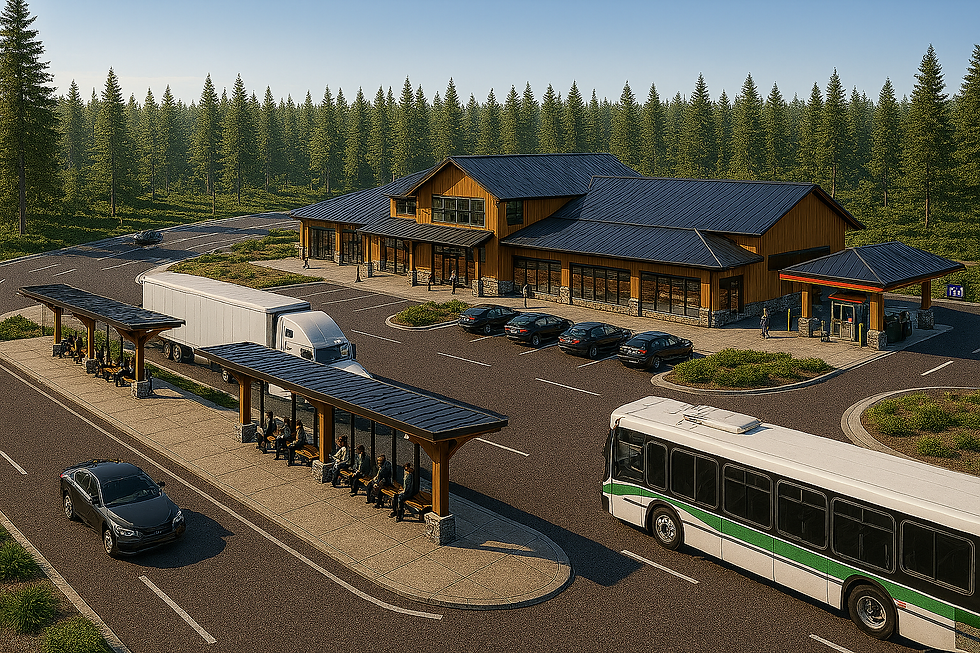
Transit or mobility hub
Design standards emphasizing:
Landscaping buffers
Low height
Dark‑sky compliance
This is not sprawl. It is compact, intentional living aligned with GMA principles.[co.jefferson.wa.us], [cityofpt.us]
B. Hybrid Mortgage and Shared‑Equity Structure
Financing Stack
Primary Mortgage
Private lender (FHA, USDA Rural Development, or conventional)
County Shared‑Equity Second Instrument
Deferred repayment
Repaid only on resale
County recaptures a portion of appreciation to keep units affordable
Down Payment Assistance
State Housing Finance Commission programs
Federal Home Loan Bank Affordable Housing Program
HUD HOME funds
This model already exists nationwide through shared‑equity and subordinate‑loan programs and is legally permissible for counties acting through housing authorities or partnerships. [fdic.gov], [hudexchange.info], [fhfa.gov]
C. Where This Could Legally Work in Jefferson County
Likely Viable Areas (Subject to Site Review)
Urban Growth Areas and Adjacent Zones
Port Hadlock UGA
Port Townsend UGA (unincorporated county areas only)
Irondale UGA reserve areas
LAMIRDs (Limited Areas of More Intensive Rural Development)
Discovery Bay
Quilcene
Brinnon
Master‑Planned or Resort‑Adjacent Areas
Port Ludlow (carefully phased, infrastructure‑dependent)
These locations already align with GMA allowances for higher rural density exceptions, LAMIRDs, and UGA‑focused growth.[co.jefferson.wa.us], [jeffcobeacon.com]
D. Business Participation: Resort‑Style Incentive Model
Businesses are invited to participate by:
Investing in workforce housing tied to local employment
Receiving:
Density bonuses
Streamlined permitting
Long‑term workforce stability
This mirrors employer‑supported housing models used in resort economies across Hawaii, Colorado, and California—adapted here for ownership, not dormitory housing.
GMA Stress Test: Legal Defensibility
Growth Management Act Requirements Addressed
GMA Requirement | How Proposal Complies |
Growth focused in UGAs | Development centered in UGAs and LAMIRDs [co.jefferson.wa.us] |
Rural character preserved | Compact design avoids lot sprawl |
Environmental protection | Low‑impact development, watershed protections [jeffersonc...health.org] |
Infrastructure concurrency | Sites limited to existing or expandable services |
Affordable housing encouraged | Explicit housing element compliance [jeffersonc...health.org] |
Key Note:Washington case law consistently supports creative density within UGAs and legal rural exceptions when tied to infrastructure and affordability. This proposal avoids prohibited blanket rural up‑zoning.
Policy Proposal 2
Jefferson County Mobility Partnership Program
Problem
Jefferson County’s fixed bus routes:
Struggle with low‑density coverage
Create stress for seniors and people with disabilities
Inflate operational costs
A. Hybrid Mobility Model
How It Works
Consolidate Core Bus Routes
Fewer stops
More reliable schedules
Stronger hub‑to‑hub service
First‑ and Last‑Mile Support
Subsidized on‑demand rides for qualifying residents
Delivered to transit hubs rather than door‑to‑door buses
B. Partnerships
Potential Partners
Autonomous vehicle companies (Waymo‑style pilots where feasible)
Regional rideshare providers
Local nonprofit transportation operators
Eligible Users
Seniors
Disabled residents
Medicaid transportation participants
Low‑income riders enrolled in public assistance programs
Funding sources may include:
Federal Transit Administration grants
Washington State mobility funds
Medicaid transportation reimbursements
County human services allocations
C. Benefits
Reduces operating costs per rider
Improves dignity and independence
Frees buses to focus on high‑efficiency corridors
Increases service reach without new bus routes
Campaign Summary Statement
Building the future means planning for the people who already call Jefferson County home.It means ownership instead of displacement, access instead of isolation, and growth shaped by community values—not speculation.
This platform is:
Legally defensible
Environmentally responsible
Economically realistic
Human‑centered
I. Partner Ecosystem (Isolated, Realistic, Jefferson‑County Appropriate)
Rather than naming a single “silver bullet” partner (which raises political and operational risk), this model uses a layered partnership stack. Each layer can operate independently if another fails.
1. Core Public Partner (Anchor)
Jefferson Transit Authority (JTA)
Role
Fixed‑route service owner/operator
Mobility hub designation authority
Grant applicant and compliance entity (FTA, WSDOT)
Data reporting and performance oversight
Why this matters FTA and State funds almost always require a public transit entity to be the primary grantee and system integrator.
2. Mobility Management & Dispatch (System Brain)
These partners do not drive vehicles. They provide the software and scheduling intelligence that make the hub‑and‑feeder model work.
A. Via Transportation (Primary Candidate)
Widely used by rural and small‑city governments
Supports phone‑based bookings (critical for seniors)
Can integrate multiple vehicle providers into one system
Already used in public microtransit + healthcare contexts
Risk mitigation If Via exits, data and workflows can be migrated to another platform.
B. Alternative / Backup Platforms
RideCo
DemandTrans
Spare Labs (strong on accessibility & call centers)
Strategic note:You never sole‑source these contracts; you issue an RFP with clear interoperability requirements.
3. Vehicle & Driver Providers (The Physical Layer)
This is where your early‑retiree / small‑business concept fits cleanly.
Tier 1: Existing Local Providers
Non‑Emergency Medical Transportation (NEMT) operators
ADA paratransit subcontractors
Local taxi or shuttle providers already licensed & insured
✅ Fastest startup✅ Medicare / Medicaid compliant✅ Lowest regulatory friction
Tier 2: Community‑Based / Second‑Career Drivers
Retirees
Part‑time operators
Small LLCs or sole proprietors
County role
Vehicle standards
Background checks
Insurance minimums
Training & branding
Key constraint These drivers operate only as feeders to hubs, not point‑to‑point taxis. That distinction avoids Uber/Lyft labor and rate controversies.
Tier 3: Future / Experimental Partners (Pilot‑Only)
Autonomous vehicle operators (Waymo‑style)
Electric neighborhood vehicles
⚠️ Explicitly non‑core ⚠️ Isolated pilots only ⚠️ Human service remains baseline
4. Funding & Cost‑Offset Partners
These partners are essential because they remove cost from the transit budget instead of adding it.
Healthcare Payors
Medicaid brokers (Apple Health NEMT)
Medicare Advantage plans offering transportation benefits
Hospital systems reducing missed‑appointment penalties
Operational insight A feeder trip to a hub that connects to a medical destination can be partially or fully reimbursable.
Housing & Workforce Alignment Partners
This connects Policy Proposal 1 and 2.
Workforce housing developers
Employers investing in employee stability
Housing authorities supporting transit‑adjacent ownership
➡ Transit hubs double as housing value multipliers without upzoning everything.
II. Operational Diagrams (How This Actually Works)
Diagram 1: Overall System Architecture
COUNTY & STATE FUNDING
│
FTA / WSDOT / CCA
│
▼
Jefferson Transit Authority
(Governance • Grants • Oversight)
│
┌────────────────┴─────────────────┐
│ │
▼ ▼
Fixed‑Route Bus Network Mobility Management Platform
(Arterial corridors) (Scheduling & eligibility)
│ │
│ ▼
│ Feeder Dispatch & Trip Matching
│ │
▼ ▼
Mobility Hubs ◀────────── Feeder Vehicles (ADA / Sedans)
│
▼
Regional Destinations
(Medical • Employment • Services)
Diagram 2: Rider Experience (Senior / Non‑Driver)
Rider at Home (Hilltop / Rural Road)
│
│ Phone call (no app required)
▼
Mobility Platform schedules feeder
│
▼
Shared Feeder Pickup
│ (5–15 min trip)
▼
Safe Access Mobility Hub
│
▼
Fixed‑Route Bus (reliable schedule)
│
▼
Medical / Shopping / Services
Key dignity feature:The rider does not need to explain disability, navigate unsafe roads, or manage multiple agencies.
Diagram 3: Cost & Funding Flow (Critical for Decision‑Makers)
Feeder Trip Cost
│
├─ Portion covered by FTA / State funds
│
├─ Portion reimbursed by Medicaid / Medicare (if eligible)
│
└─ Small local match (only for uncovered trips)
Result:
• Lower cost per passenger than expanding bus routes
• Healthcare system absorbs part of the load
• County exposure capped by policy
III. Why This Partnered Model Is Strategically Strong
1. No Single Point of Failure
If:
A software vendor changes terms → replaceable
A driver pool shrinks → other tiers backfill
A funding stream tightens → healthcare offsets remain
2. Politically Defensible
You can truthfully say:
“We are not privatizing transit”
“We are not cutting service”
“We are reducing safety risk”
“We are piloting, not committing”
3. Scales Both Directions
Can stay small (2 hubs, peak periods)
Or expand as housing and senior needs grow
IV. How This Ties Back to Your Policy Proposal
Your housing proposal and mobility proposal align structurally:
Housing (Proposal 1) | Mobility (Proposal 2) |
Compact living | Concentrated hubs |
Shared equity | Shared mobility |
Workforce stability | Access stability |
Not sprawl | Not route sprawl |
Together, they form a county‑level resilience strategy, not a single program.
Jefferson County Workforce Ownership Housing Pilot (JWOHP)
System Build‑Out
I. Partner Ecosystem (Isolated by Function)
The core principle here is distributed responsibility: no single entity holds all the risk, capital, or political exposure.
1. Public / Quasi‑Public Anchors (Legitimacy & Control)
Jefferson County
Primary roles
Land use authorization (UGA, LAMIRD, planned area overlays)
Infrastructure concurrency verification
Use of HOME funds or similar for shared‑equity seconds
Convening authority across departments
Why essential The County is the only actor that can legally align:
land use,
affordability covenants,
long‑term resale controls.
Jefferson Transit Authority (JTA)
Primary roles
Commit to proximity standards (housing → hub distance)
Serve as mobility hub operator
Synchronize transit planning with housing phasing
Strategic value Housing + transit coordination strengthens both grant competitiveness and project feasibility.
Housing Authority / County‑Enabled Entity (If Needed)
Options:
Existing housing authority
County‑created nonprofit subsidiary
Joint Powers or Interlocal Agreement entity
Role
Hold shared‑equity second instruments
Enforce resale and appreciation caps
Act as long‑term steward without owning homes
2. Development & Construction Partners (Physical Delivery)
A. Modular / Manufactured Home Builders
Best aligned product
HUD‑code manufactured homes on permanent foundations
Modular homes meeting WA energy and seismic standards
Why this matters
Predictable pricing
Rapid delivery
Aligns with small‑lot fee‑simple ownership
Partner types
Regional prefab builders
NW modular manufacturers
Mission‑aligned builders doing workforce product
B. Master‑Site Developers (Infrastructure First)
These are not speculative developers; they are site assemblers and infrastructure coordinators.
Roles:
Internal roads
Utilities
Common open spaces
HOA or commons governance setup
Revenue:
Lot sales, not long‑term rental income
3. Financial Partners (Stack Assembly)
This is where the model becomes powerful.
Primary Mortgage Lenders
USDA Rural Development (502 Direct / Guaranteed)
FHA‑approved lenders
Community banks serving Jefferson County
Key requirement Must allow subordinated shared‑equity instruments (many already do).
Shared‑Equity / Second‑Lien Capital Sources
County HOME funds
State Housing Finance Commission programs
Federal Home Loan Bank AHP grants
Role
Reduce first‑mortgage burden
Defer repayment until resale
Capture limited appreciation to preserve affordability
Mission‑Aligned Capital (Optional)
Credit unions
Employer‑supported housing funds
Impact investors accepting low yield
4. Workforce & Employer Partners (Demand Stabilizers)
These partners do not own the housing, but benefit from it.
Examples:
Healthcare providers
Schools and educational institutions
Trades and marine industries
Hospitality employers (esp. near Port Townsend / Ludlow)
Participation mechanisms:
Capital contributions to shared‑equity pool
Master lease backstop (limited duration)
Down‑payment assistance tied to employment tenure
5. Community & Stewardship Partners
Roles:
Homebuyer education
Resale monitoring
Governance support (HOAs, commons rules)
Candidates:
Local nonprofits
Credit counseling agencies
Cooperative development orgs
II. Viable Areas of Implementation (Planning‑Sound)
The pilot succeeds only if location discipline is maintained. Below is a tiered logic—not wish‑casting.
Tier 1: Urban Growth Areas (Highest Confidence)
Port Hadlock UGA
Why it works
Existing infrastructure
Central county access
Near healthcare and services
Suitable scale for compact ownership clusters
Ideal site type
3–10 acre parcels
Adjacent or near arterials served by transit
Port Townsend UGA (Unincorporated Areas Only)
Why it works
Employment centers nearby
Strong transit backbone
Clear housing demand
Constraint Must avoid city‑jurisdiction conflicts unless interlocal supported.
Tier 2: LAMIRDs (Middle‑Risk, High Payoff)
Discovery Bay
Quilcene
Brinnon
Why these work
Explicit GMA allowance for limited intensification
Existing settlement patterns
Natural hubs for workforce retention
Use case
Smaller clusters (15–30 homes)
Strong community buy‑in required
Phased utility upgrades where needed
Tier 3: Master‑Planned / Resort‑Adjacent (Careful Use)
Port Ludlow (Selective / Phased Only)
Why this is sensitive
Higher land values
Infrastructure constraints
Political scrutiny
Justifiable only if
Employer‑linked workforce housing
Strong transportation linkage
No displacement of existing residents
III. Operational Mapping: Housing + Transit + Mobility
This is where your two policy proposals lock together.
Diagram 1: Spatial Relationship
[ Workforce Housing Cluster ]
• Small Fee‑Simple Lots
• Owner‑Occupied
• Shared Green Space
│
5–10 min walk / ride
│
[ Mobility Hub ]
• Safe Bus Access
• Feeder Pick‑Ups
• Lighting / Seating
│
Fixed‑Route Transit
│
Employment / Care
Diagram 2: Daily Functional Loop (Resident)
Home (Owned)
│
├─ Walk / Feeder Ride
▼
Transit Hub
│
├─ Fixed‑Route Bus
▼
Work / Medical / Services
│
└─ Reverse flow same day
This reduces:
car dependency,
parking pressure,
infrastructure sprawl.
Diagram 3: Institutional Loop (County Perspective)
County Land Policy
│
Shared‑Equity Capital
│
Homeownership Stability
│
Workforce Retention
│
Transit Viability
│
Lower Public Costs
IV. Why This Model Is Structurally Strong
1. Ownership Without Speculation
Fee‑simple title
Appreciation sharing
Resale controls that are legal and tested
2. Transit‑Ready by Design
Not “near transit” as an afterthought
Housing is planned with the mobility network
3. Phased, Not Fragile
First site proves concept
Subsequent sites easier politically and financially
Each phase can stop without system collapse
4. Legally Defensible Under GMA
Focused in UGAs/LAMIRDs
Compact footprint
Infrastructure alignment
Explicit affordability purpose
V. What This Is Not
Not dormitory workforce housing
Not rural sprawl
Not rental‑only dependency
Not transit‑optional suburbanization
It is resilient, ownership‑based community infrastructure.
PART I — PILOT SITE CONCEPT PLAN
Jefferson County Workforce Ownership Housing Pilot (JWOHP)
Pilot Objective
Deliver a 15–30 unit ownership‑based housing community that:
Is legally defensible under GMA
Is financially attainable for local workers
Is functionally connected to transit
Preserves long‑term affordability without rentalization
1. Target Pilot Program Size
Element | Target |
Total Units | 20–25 (ideal first pilot) |
Parcel Size | 3–6 acres |
Lot Size | 1,500–2,500 sq ft |
Unit Type | Manufactured or modular on permanent foundation |
Ownership | Fee‑simple |
Affordability Target | 80–120% AMI workforce |
Buildout | Single phase preferred |
2. Ideal Pilot Location Criteria
A site does not move forward unless it meets all of the following:
✅ Inside UGA or LAMIRD✅ Existing or expandable water & sewer✅ Within ~½ mile of a transit corridor or hub✅ Flat or gently sloped land (<10%)✅ No critical area encroachment requiring variances✅ No displacement of existing residents
3. Conceptual Site Layout (Narrative + Diagram)
Design Philosophy
“Compact village, not subdivision.”
Homes face inward toward shared green space
Cars pushed to edges; people prioritized centrally
Clear pedestrian spine to mobility hub
Dark‑sky compliant lighting
Landscaping buffers between site and neighbors
Conceptual Plan Diagram (Textual)
┌─────────────────────────────────────────────┐
│ LANDSCAPE BUFFER / TREES │
│ │
│ ┌─────┐ ┌─────┐ ┌─────┐ ┌─────┐ │
│ │ H1 │ │ H2 │ │ H3 │ │ H4 │ │
│ └─────┘ └─────┘ └─────┘ └─────┘ │
│ │ │ │ │ │
│──────────── SHARED GREEN ──────────── PATH ──│
│ │ │ │ │ │
│ ┌─────┐ ┌─────┐ ┌─────┐ ┌─────┐ │
│ │ H5 │ │ H6 │ │ H7 │ │ H8 │ │
│ └─────┘ └─────┘ └─────┘ └─────┘ │
│ │
│ Pavilion / Mail / Seating / Bike Storage │
│ │
│──── Internal Shared Street (Slow-Speed) ────│
│ Parking Pods (Edge-Loaded / Screened) │
└─────────────────────────────────────────────┘
│
│ 5–10 min walk / feeder
▼
SAFE ACCESS MOBILITY HUB (Transit)
4. Housing Product Standards (Pilot‑Level)
Unit Requirements
HUD‑code manufactured or modular homes
Permanent foundation
Energy‑efficient envelope (WA code or better)
Universal design features encouraged (step‑free entry)
Exterior Standards
Max 1–2 stories
Neutral, non‑reflective materials
Small front porches encouraged
Varied façades to avoid uniformity
5. Ownership + Affordability Model (Operationalized)
Title Structure
Fee‑simple ownership
HOA or commons association for shared areas only
Affordability Mechanism
County (or partner authority) holds a shared‑equity second
No monthly payment on second
Repayment triggered only on resale
Appreciation split preserves affordability for next buyer
Why this works
Owners build equity
County investment recaptures
Units never convert to speculative market product
6. Transit & Mobility Integration (Required, Not Optional)
Mobility Requirements
Site must:
Connect via sidewalk/path to a Mobility Hub
Or be directly served by feeder pickup
No housing approval without a Mobility Access Plan
Resident Transportation Flow
Owned Home
│
Walk / Feeder Ride
│
Mobility Hub
│
Fixed Route Bus
│
Work / Medical / Services
This is what makes the project viable without inducing traffic or parking overflow.
7. Phasing & Replication Strategy
Pilot Phase (Site #1)
Prove design, pricing, resale controls, and transit linkage
Phase 2–3
Clone model into:
Additional UGAs
Select LAMIRDs
Adjust lot count, not structure
PART II — COUNTY RFP FOR DEVELOPMENT PARTNERS
This RFP is intentionally written to attract mission‑aligned partners, not speculative actors.
REQUEST FOR PROPOSALS
Jefferson County Workforce Ownership Housing Pilot
1. Purpose
Jefferson County seeks proposals from qualified development teams to design, construct, and deliver a small‑scale workforce ownership housing community that preserves long‑term affordability and aligns with County land‑use, transit, and housing goals.
2. Project Overview
The selected partner will:
Develop a 15–30 unit fee‑simple ownership community
Utilize manufactured or modular housing
Coordinate with the County on shared‑equity financing
Integrate site design with public transit access
This is a pilot project intended for replication.
3. Eligible Respondents
For‑profit or nonprofit developers
Development teams with:
Infrastructure capability
Modular/manufactured housing experience
Workforce or affordable ownership experience
Joint ventures encouraged.
4. Scope of Work
Developer Responsibilities
Site acquisition or optioning (unless County‑owned)
Site planning, engineering, permitting
Construction of homes and infrastructure
Coordination with lenders and County equity partners
Initial HOA setup and transition
County Responsibilities
Land‑use entitlement pathway
Shared‑equity financing structure
Coordination with transit provider
Grant and funding source alignment
5. Required Proposal Components
Development Team & Experience
Conceptual Site Plan
Housing Product Description
Proforma (high‑level acceptable)
Affordability Strategy
Timeline & Phasing
Risk Management & Cost Controls
Transit & Mobility Access Plan
6. Evaluation Criteria (Weighted)
Criteria | Weight |
Demonstrated delivery capability | 25% |
Long‑term affordability strategy | 25% |
Site & design quality | 20% |
Cost realism | 15% |
Transit integration | 10% |
Community fit | 5% |
7. Key Conditions
No rental conversion permitted
No short‑term rental eligibility
Appreciation limits required
County retains affordability enforcement rights
Failure to meet affordability terms triggers remedies
8. Timeline (Illustrative)
Milestone | Target |
RFP Issued | Month 0 |
Proposals Due | Month 2 |
Selection | Month 3 |
Design Finalization | Month 6 |
Construction Start | Month 9 |
Occupancy | Month 18 |
Why This Package Works
Concrete, not abstract
Small enough to succeed
Large enough to matter
Transit‑aligned, not car‑dependent
Ownership‑first, not rental‑fallback



Comments